What is the ISFCE?
.png)
The International Society of Forensic Computer Examiners (ISFCE) is a private organization dedicated to providing an internationally recognized, unblemished computer forensics certification, training and proficiency testing that are available to all who can qualify, for a reasonable cost.
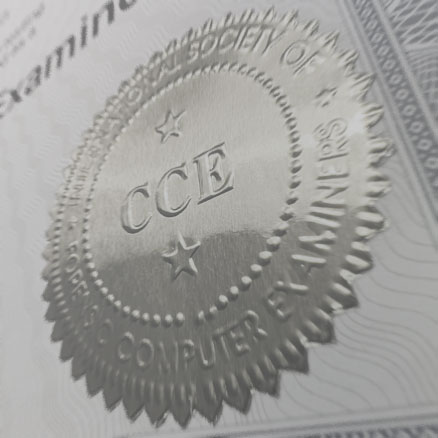
The principal certification offered by the ISFCE is the Certified Computer Examiner (CCE). First awarded in 2003, this certification is the result of the ISFCE’s desire to increase the level of professionalism and further the field and science of computer forensics. The foundation of this certification maintains a fair, uncompromised process for certifying the competency of forensic computer examiners and sets high forensic and ethical standards for forensic computer examiners.
The ISFCE is an internationally recognized organization that has trained and certified well over 2000 individuals across numerous countries. Accessible to candidates worldwide, the CCE has become widely accepted as a prerequisite certification for forensic examiners, recognized by industry professionals and academic institutions alike.
Our History
The ISFCE began as a result of the efforts of Mr. John Mellon (1941-2018). Mr. Mellon received early computer forensic training in 1991 by the International Association of Computer Investigative Specialists (IACIS). He was an active member of the organization and a member of their Board of Directors. As a past chairman of the IACIS DOS Seizure Certification Committee, IACIS DOS/Windows Processing Certification Committee and CFCE certification committee he was actively involved with establishing forensic standards for law enforcement throughout the United States and abroad. A lead instructor at numerous training conferences and involved in the training of hundreds of law enforcement officers since 1994, Mr. Mellon developed and implemented the IACIS Forensic Examination Standards, their Code of Ethics, the advanced Windows Processing Certification and the initial Certified Forensic Computer Examiner (CFCE) problems.
After completing his work with IACIS, Mr. Mellon founded the International Society of Forensic Computer Examiners (ISFCE). With unparalleled experience in computer forensic education and certification and a clear vision of unmatched ethical standards, Mr. Mellon set out to create a certification process that fulfilled this vision and made computer forensic certification available to all who qualify. That vision came to fruition in 2003, when the first Certified Computer Examiner (CCE) certification was awarded.
Since 2003, the organization and certification has remained current in the forensic industry without compromising the foundation built upon the vision of Mr. Mellon. The ISFCE continues to serve its certified community and positively influence the world of computer forensics.
Our Mission
It is the mission of the ISFCE to foster a community of competent digital forensics professionals through administration of the Certified Computer Examiner certification, providing avenues for knowledge sharing, and through the training of individuals committed to furthering the acquisition and analysis of electronic evidence, the presentation of facts, and expert opinion related to digital matters of significance to governments, companies, and individuals.
The purpose of the ISFCE is to...
- Professionalize and further the science of digital forensics
- Provide a fair, vendor-neutral, uncompromised process for training and certifying forensic computer examiners
- Set high forensic and ethical standards for the industry
- Conduct research and development into new and emerging technologies and methods in the science of digital forensics
- Build a strong communtity of like-minded professionals and industry leaders
The ISFCE provides...
- Fair and balanced, internationally recognized computer forensic certification and training
- Vendor neutral training and certification open to Law Enforcement and non-Law Enforcement personnel
- A vast professional network and resource pool for certified individuals
- Industry leading digital evidence handling proficiency testing
- A strong Code of Ethics and Professional Responsibility
Our Vision
The ISFCE endeavors to be the preeminent professional society for digital forensics examiners by enhancing and maintaining the integrity and rigor of the Certified Computer Examiner (CCE) certification, through regular evaluation of core competencies and testing standards. The society strives to provide a valuable member experience through professional education, knowledge sharing, and networking opportunities.
What We Do